If you sell over the phone in India, you've probably heard some version of "you can't cold-call people, it's illegal," usually from someone who's never read the actual rule and is going on vibes. The truth is more specific and, honestly, more useful than that: TRAI's framework was built to police bulk commercial messaging, not to ban a human being from calling another human being from their own number. But "not built for you" is a long way from "doesn't apply to you at all," and that gap is where most of the anxiety, and most of the actual risk, lives.
The short version
TRAI (the Telecom Regulatory Authority of India) regulates what it calls Unsolicited Commercial Communications (UCC) under a framework generally known as TCCCPR (Telecom Commercial Communications Customer Preference Regulations), with the most significant modern version dating to 2018. The point of the framework is simple: give subscribers a way to say "don't call me with sales pitches," and give telecom operators a mechanism to enforce that at scale.
The mechanism is the National Customer Preference Register, usually still called the DND registry: the same idea people mean when they say the older name, NDNC. Anyone can register a number there to opt out of commercial calls and SMS.
Who TRAI's rules actually target
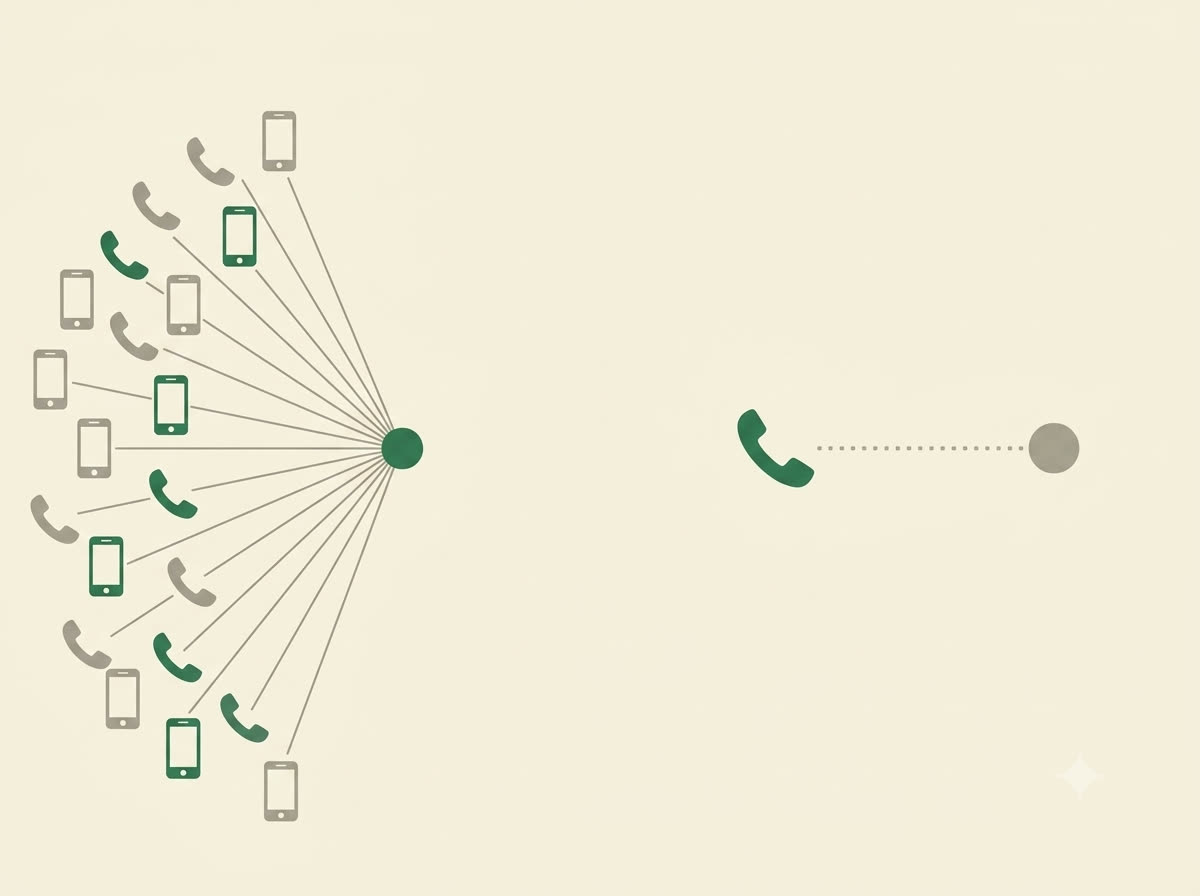
The enforcement machinery is built around Registered Telemarketers: businesses that send commercial calls or SMS in bulk, through officially registered number series or SMS headers, specifically so the traffic is identifiable and scrubbable against the DND list. That registration requirement exists because bulk messaging is the thing that actually needs policing: one telemarketing operation can generate millions of unwanted calls a day, and the system is designed to catch that at the source.
A solo salesperson working through a personal contact list, dialing one number at a time from their own SIM, is not operating as a registered bulk telemarketer and isn't routing calls through that registered infrastructure at all. That's a real, meaningful distinction. It's the reason this whole topic feels murkier for individual callers than for call centers, and it's worth understanding clearly rather than assuming the worst.
What this means if you're calling from your own number
Here's where it gets nuanced, and where we're not going to pretend there's a clean, absolute answer: operating outside the registered-telemarketer system is not the same thing as a blanket exemption. A subscriber can still report an unwanted commercial call to their telecom operator regardless of who placed it or how. The DND registration reflects the recipient's preference, and a complaint mechanism exists independent of whether the caller was ever "registered" as anything. A personal number that racks up a pattern of complaints isn't automatically safe just because it didn't come from a call centre's registered header.
So the honest framing is: individual, one-at-a-time calling from a personal number sits in a genuinely different, and generally lower-friction, position than bulk telemarketing, but "different category" isn't the same as "zero risk," and treating it that way is how people get themselves into trouble they didn't see coming.
The rules were written for the sender who calls a million people a day. That doesn't mean the recipient who's annoyed at call number one stops mattering.
Practical habits that keep you safe regardless of the fine print
Whatever the precise legal position turns out to be for your situation, these habits reduce actual risk and, just as importantly, make you better at the job:
- Favor warm leads and existing relationships over cold-blasting a purchased list. A list you bought from a broker is exactly the kind of traffic that generates complaints: it's cold, it's often stale, and the people on it never asked to hear from you.
- Keep an opt-out list, and actually respect it. If someone tells you not to call again, that has to stick permanently, not just for the current campaign.
- Never spoof or rotate caller IDs to dodge complaints or blocks. Beyond the regulatory exposure, it's the single fastest way to make your number look like a scam operation to anyone screening calls.
- Call during reasonable daytime hours. Independent of any regulation, a call at 9pm converts worse and irritates more than the identical pitch at 11am.
- B2B outreach to a business's own published contact number generally sits in a different, lower-risk category than mass consumer calling. Though "generally" is doing real work in that sentence, and it's not a guarantee for every scenario.
Where a simple habit does more than a legal opinion
The single most useful practical tool here isn't a clause you memorize. It's actually respecting "no" the first time you hear it, consistently, across your entire list, forever. That's harder than it sounds once you're fifty calls into a day and running on memory. In Cadence, tagging a number Do Not Call after that conversation keeps that decision visible in your call history every time you revisit the list later, so "I told you not to call me" never becomes a second, worse conversation. The Wrong Number tag does the same job for a different problem: a stale or mistyped entry from an old sheet that shouldn't be dialed again either. Neither tag changes what the phone does on its own; they're there so the decision you already made doesn't get forgotten and repeated by accident.
The bottom line
TRAI built its enforcement system around bulk telemarketers, and an individual salesperson dialing their own list from their own number sits outside that registered machinery. That's genuinely useful context, and it should ease some of the anxiety around "am I even allowed to do this job." But it isn't a green light to ignore how the person on the other end feels about being called, and it isn't a substitute for actual legal advice if outbound calling is how your business makes its money. Treat the regulatory question and the "don't annoy people" question as related but separate: get the first one answered by someone qualified, and handle the second one yourself, call by call, starting today.
Back to blog